How to assign a NAICS code to a facility you only know from imagery
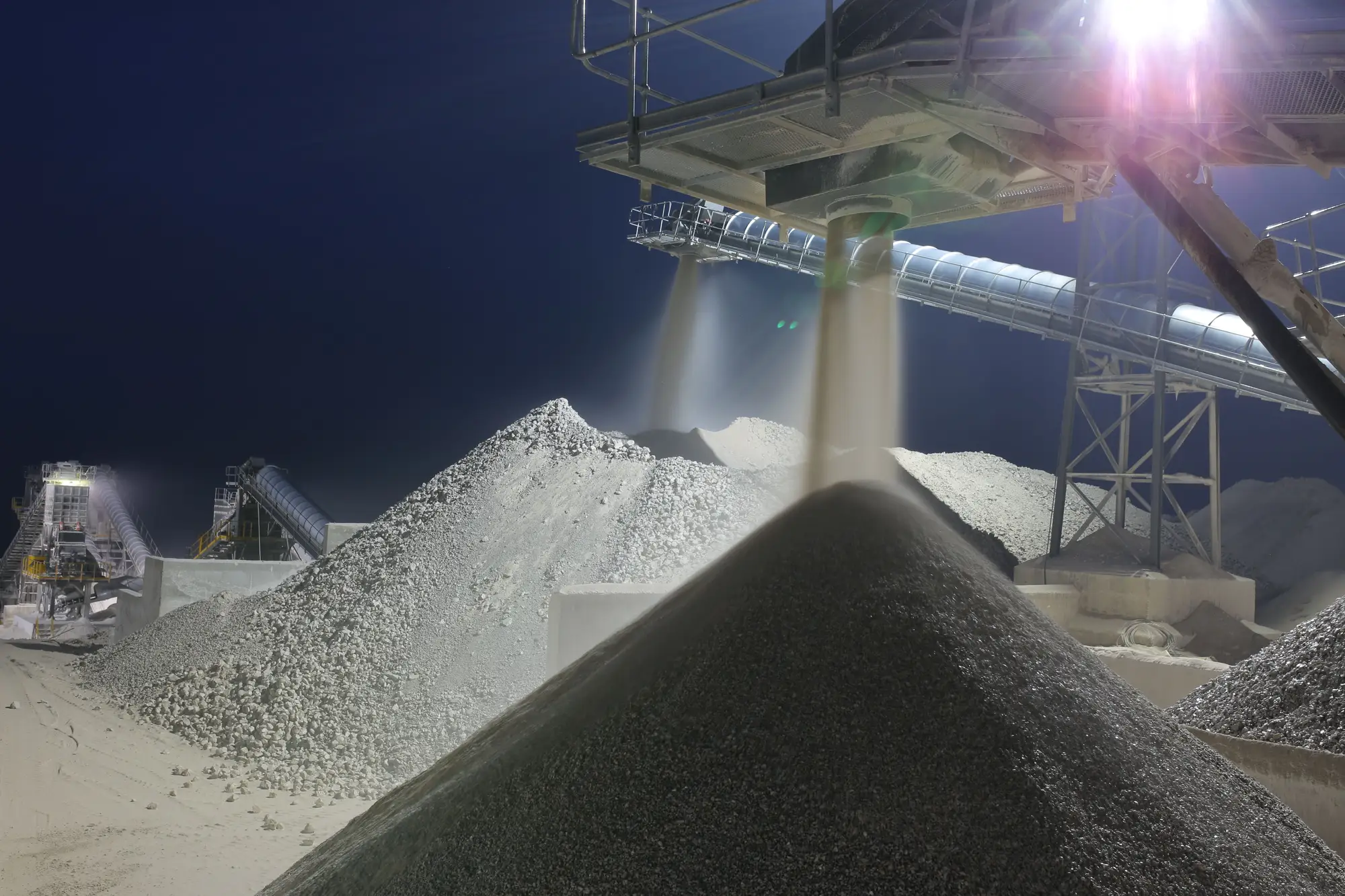
You've got a polygon. No business name, no address, no filing. Just a roofline, a yard layout, and maybe a stockpile or tank farm sitting next to a rail spur. Your territory model needs a code on it before it can go anywhere near a sales rep's account list, and the usual shortcut, pulling a NAICS code off a business registration, isn't available because the facility never registered anywhere you can see.
This is the part of market sizing nobody puts in the methodology slide: coding a site you found instead of a site you were handed.
Start from what the imagery actually shows you
Before you open the NAICS manual, work the physical signature. A concrete batch plant and an asphalt plant look almost identical from the road but read differently from above: silo cluster size, the presence of an aggregate stockpile versus a liquid tank farm, conveyor runs, and truck staging patterns all separate them. A scrap yard shows as irregular piles and crane tracks. A distribution terminal shows as trailer rows and dock doors, not stockpiles at all. None of this gives you six digits on its own, but it narrows you to a two- or three-digit range fast, and it stops you from coding a rock quarry as a landscaping supplier because both have gravel piles out front.
Write down the physical evidence before you touch a code list. If you code first and rationalize the imagery to fit, you'll miss the cases where the site genuinely doesn't match the obvious guess.
SIC vs NAICS for industrial sites
SIC still shows up in a lot of legacy market data and in some state permitting databases, and for physical industrial sites it's sometimes the faster fit because it was built around production processes, not product markets. NAICS reorganized a lot of manufacturing into finer slices, which helps for software and services but can split a straightforward industrial operation across codes in a way that doesn't match how the site actually runs. If your downstream system (CRM, territory tool, a client's existing TAM model) was built on SIC, don't force a NAICS-first workflow just because NAICS is newer. Code to whatever the system of record uses, and keep the crosswalk notes with the record so the next analyst isn't guessing why you picked what you picked.
For an unaddressed site, the practical order is usually: confirm the physical signature, pick the SIC or NAICS code that matches the process you can see (not the one that matches a nearby known competitor), then flag confidence level rather than pretend to a precision you don't have.
Coding the unlisted facility
For a site with no name and no filing, the code is often your best available label for what the business is, not a lookup of what it's registered as. A few things make that label hold up under review:
Cross-reference what you can. Permit records, environmental filings, and utility connection data sometimes exist even when a corporate registration doesn't, especially for pits, quarries, and heavy processing sites subject to local permitting. These won't always carry a name either, but they can confirm the process type.
Keep the evidence trail with the code. A code with no supporting note is a guess six months later. A code with "tank farm, 6 vessels, rail spur, no visible loading dock" attached is a judgment call someone can re-check.
Treat ambiguous sites as a category, not an error. Some percentage of any sweep will be genuinely hard to call between two adjacent codes. Flagging those as uncertain is more useful to a planning team than forcing a false-precise single code across the board.
None of this replaces a human reviewer scoping the harder cases by hand. What imagery gives you is the raw inventory, the thing you didn't have before: a geocoded list of every yard, plant, and pit matching a physical signature across a territory, found and placed on a map whether or not it ever filed paperwork anywhere. Facility Discovery runs that sweep annually at country scale, so the coding work starts from a complete list instead of whatever's already in your CRM.
If you're staring down a territory with more unlisted sites than listed ones, it might be worth seeing what a full sweep of your target signature turns up.