How to pick satellite resolution for mapping yards, plants, and pits
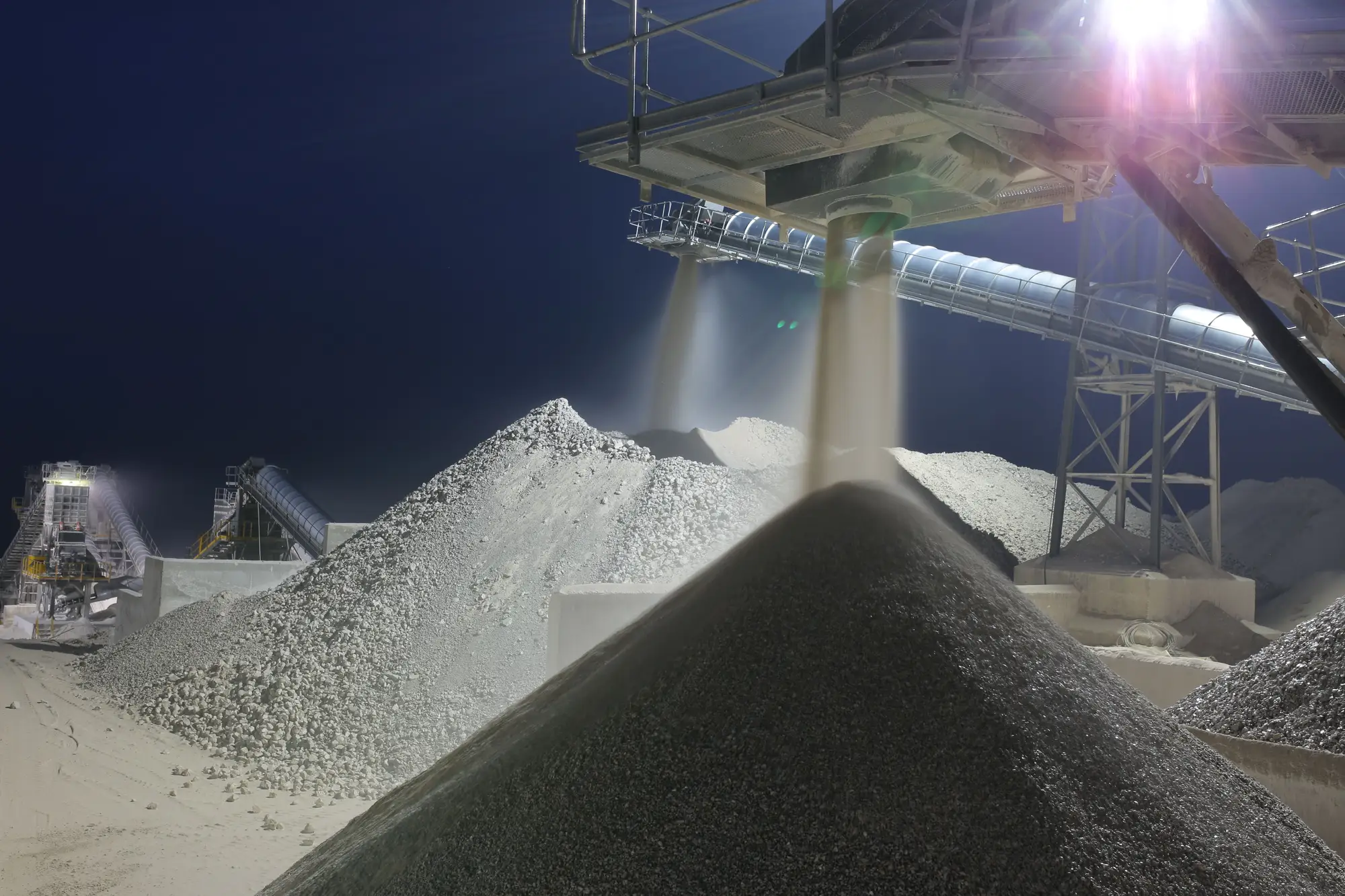
When you're trying to figure out how many facilities exist in a market nobody's ever inventoried, the resolution question comes up fast. Not after you've seen the imagery. Before you've bought it. Pick wrong and you either burn budget on frames you didn't need or end up squinting at pixel soup trying to tell a yard from a parking lot.
Ground sample distance, GSD, is just the size of one pixel on the ground. A 2 m GSD scene means each pixel covers a 2x2 meter patch. A 0.5 m scene packs sixteen pixels into that same patch. More pixels means more shape, more edges, more of the texture that actually separates one kind of site from another.
What you can resolve at each GSD
At 2 m, you can confirm a cleared area, a hardstand, a cluster of large structures. You can see that something industrial sits on a parcel. What you usually can't do is tell a concrete batch plant from a scrap processor from a bulk terminal, because the thing that distinguishes them, equipment layout, stockpile shape, the silhouette of a specific rig, falls below what the pixel grid can hold. You're left guessing from parcel size and road access, which works until it doesn't.
At 0.5 m, a storage yard stops being a gray rectangle and starts being a yard: rows of equipment, stacked material, the gap pattern between units that tells you whether it's an active lot or a dead one. A pit shows its bench lines and haul roads instead of just a brown scar on the landscape. This is the resolution where a target signature, the specific combination of shape, material, and layout you're hunting for, has something to match against.
The honest middle ground is this: 2 m is fine for a first-pass filter over a huge area, flagging candidate parcels for a human to look at later. It's the wrong tool if the deliverable is a confident count of a specific facility type across a whole country. For that you need enough pixels to see the signature, not just the footprint.
Why spectral band and cadence matter as much as pixel size
Resolution gets all the attention, but it's not the whole spec. RGB imagery, the same three bands your eye already works in, is what most facility-signature work runs on. You're matching shape and layout, not heat or vegetation stress, so thermal bands don't add much here and most high-res satellite tasking doesn't carry them anyway.
Cadence is the other half nobody budgets for. If you're building a census, a one-time or annual sweep covering the whole country beats a weekly feed you can't afford to run at scale. A facility that's a scrap yard this year is usually still a scrap yard next year. The build-out and shutdown cycle for yards, plants, and pits runs in years, not weeks, so an annual refresh keeps the list current without paying for daily revisit you'd never use.
Matching resolution to the question you're asking
Before you commission a sweep, write down the actual question. "Does a facility exist here" is a 2 m question. "How many facilities matching this layout exist across the territory" is a 0.5-2 m question, and it's the one most OEM market-sizing work turns out to be. If you're not sure which one you're asking, start by listing three or four confirmed sites you already know and describing what makes them recognizable from above: stockpile geometry, yard footprint, equipment count. That description is your target signature, and it tells you how fine a pixel you need.
Getting this spec right once, at the front of a project, saves you from re-flying a country because the first pass couldn't tell a landscaping yard from a demolition yard. Facility Discovery runs that kind of country-scale sweep against a target signature you define, built on the resolution range this kind of census needs.
If you've got a target signature in mind and want to see what a sweep against it would turn up, that's the conversation to start.